The Hay Wain
John Constable · 1821
Explore the painting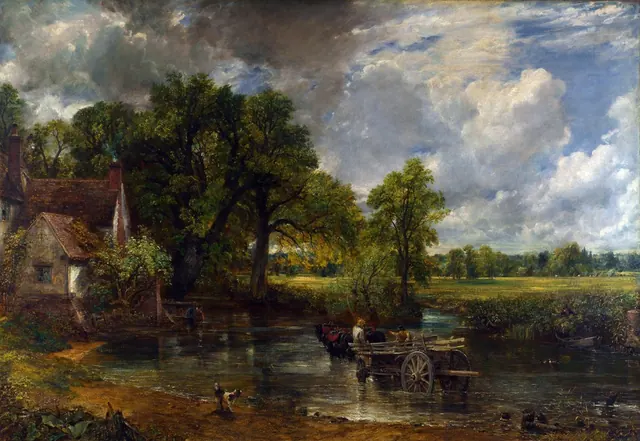
A wagon crosses shallow water at Flatford on the River Stour. Haymakers work in the distance, and tenant farmer Willy Lott’s house stands on the left. Constable knew the area from childhood; his family operated mills. Yet he painted the large 1821 canvas in London. Drawings, small studies and a full-size preparatory sketch transformed familiar rural life into an exhibition landscape.
The house stands directly beside the water. White wall, red roof and dark windows remain clear amid the foliage. Constable returned to the building in studies over several years. Here it marks continuing human habitation. Familiarity with a place does not mean that every detail came from a single day. The view was assembled from accumulated observations.
The empty wagon moves through the water towards a crossing. Distant workers and a loaded vehicle connect the foreground episode with haymaking. Light shirts and red harness details enliven the dark group. Yet the wagon occupies only a small part of the canvas. Labour belongs to a wider landscape in which weather, plants and water receive equal attention.
A dog stands on the near bank looking towards the wagon. Its silhouette connects our position with the activity in the water. Dark and light patches on its body echo the surrounding illumination. Constable revised the foreground, removing a previously painted rider. The sense of an unforced rural view emerged through selecting and excluding details.
Large trees shade the bank and leave openings towards the distant fields. Numerous short light touches describe the foliage. From afar they suggest flickering light; close up they remain separate patches of paint. This handling conveys the changeability of a summer day without outlining every branch. We can watch colour becoming foliage.
Clouds occupy much of the sky. Their grey bases and illuminated edges account for the alternation of light and shade below. The sky is active in the rural scene: weather determines the landscape’s appearance and the conditions of haymaking. Constable connects human routines with natural processes without turning the picture into an inventory of agricultural tasks.
The distant haymakers are tiny. To the viewer they belong to a peaceful scene, although the work itself requires effort. That gap invites discussion of how far the landscape expresses workers’ experience and how far the artist’s memory of familiar country. Their wages, fatigue and relations with landowners are unseen. The picture’s beauty leaves these dimensions of rural life outside the frame.
In London, the painting was exhibited as Landscape: Noon and found no buyer. At the Paris Salon of 1824, it brought Constable a gold medal. His familiar country view mattered to artists elsewhere seeking new ways to paint nature. A private memory of place became part of an international conversation about painting.
- Medium
- Oil on canvas
- Collection
- National Gallery, London
Sources
Reproduction of a public-domain artwork. Image licence